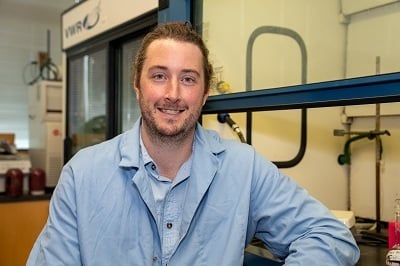
Use data, experimentation and analysis to move ideas ahead.
INNOVATION & HANDS-ON LEARNING
INDUSTRY-EXPERIENCED FACULTY
SCIENCE MEETS INNOVATION
LAUNCH YOUR FUTURE
Find Your Program
Choose Your Location:
Program Level:
Biochemistry
On-Campus
First-year
Transfer
Accredited by the American Society for Biochemistry and Molecular Biology, this program is designed to prepare students for a career in biochemistry or graduate studies, and provides a foundation for success in health, medical and dental programs.
Upcoming Terms
Fall 2027: Fall Entry Term
Apply by Mar 1, 2027
Bioinformatics
On-Campus
First-year
Transfer
This is a multidisciplinary program that uses computational and statistical tools to answer large biological questions. Students will learn underlying biological concepts and theory and interpretation of extremely large datasets.
Upcoming Terms
Fall 2027: Fall Entry Term
Apply by Mar 1, 2027
Biological Science
On-Campus
First-year
Transfer
This program provides students a broad background in biology, preparing students for work in research, teaching, laboratories, professional schools, and graduate programs.
Upcoming Terms
Fall 2027: Fall Entry Term
Apply by Mar 1, 2027
Biological Science (BA)
Online
First-year
Transfer
This program provides students a broad background in biology, preparing students for work in teaching, professional schools, and graduate programs.
This program prepares students for medical school, graduate school in biophysics, and careers in the biomedical industry.
Upcoming Terms
Spring 2027: Spring Entry Term
Apply by Nov 16, 2026
Fall 2027: Fall Entry Term
Apply by Mar 1, 2027
Brewing Science Certificate of Undergraduate Study
On-Campus
First-year
Transfer
This program is ideal for undergraduate students and working professionals looking to master the technical and industrial aspects of beer production to qualify for employment or advancement in the brewing industry.
Upcoming Terms
Spring 2027: Spring Entry Term
Apply by Nov 1, 2026
Fall 2027: Fall Entry Term
Apply by Jul 1, 2027
Cannabinoid Chemistry Certificate of Graduate Study
On-Campus
Graduate
This program will prepare students for the analysis of marijuana, cannabinoids, and will prove useful for careers in health, food science, pharmaceuticals, and biotechnology.
Upcoming Terms
Spring 2027: Spring Entry Term
Apply by Nov 1, 2026
Summer 2027: Summer Entry Term
Apply by Apr 1, 2027
Cartography and GIS Post-Baccalaureate Certification
On-Campus
Graduate
This program is designed to accommodate working professionals in planning, public health, engineering, and business to gain expertise in Cartography & Geographic Information Systems (G.I.S.).
Upcoming Terms
Spring 2027: Spring Entry Term
Apply by Nov 1, 2026
Summer 2027: Summer Entry Term
Apply by Apr 1, 2027
Chemistry
On-Campus
First-year
Transfer
This American Chemical Society-approved program emphasizes hands-on research, modern instrumentation, and rigorous training in analytical, inorganic, organic, physical, and biochemistry. It prepares students for industrial careers, medicine, or graduate studies.
Upcoming Terms
Spring 2027: Spring Entry Term
Apply by Nov 16, 2026
Fall 2027: Fall Entry Term
Apply by Mar 1, 2027
Community and Environmental Planning
On-Campus
First-year
Transfer
This program prepares students for positions in local, state, and federal agencies, private companies, planning departments, engineering firms, and graduate education, with a special focus on sustainable community design and land conservation.
Upcoming Terms
Spring 2027: Spring Entry Term
Apply by Nov 16, 2026
Fall 2027: Fall Entry Term
Apply by Mar 1, 2027
Environmental and Sustainability Studies
On-Campus
First-year
Transfer
This program offers an internship program which provides real-world experience dealing with ESS issues. Graduates work in state and local government; local and state park systems and water utilities.
Upcoming Terms
Fall 2027: Fall Entry Term
Apply by Mar 1, 2027
Environmental Science
On-Campus
First-year
Transfer
This program is designed for careers in environmental consulting, management, science writing, or science education, and provides the flexibility to pursue a second major in Education, Communications, Environmental & Sustainability Studies, and Geology.
Upcoming Terms
Fall 2027: Fall Entry Term
Apply by Mar 1, 2027
Geographical Information Science (GIS)
On-Campus
First-year
Transfer
A professional degree program that prepares students for careers in research laboratories, local, state, and federal agencies, planning departments, and engineering firms.
Upcoming Terms
Fall 2027: Fall Entry Term
Apply by Mar 1, 2027
Geography
On-Campus
First-year
Transfer
This is a flexible program focused on human and physical geography, spatial analysis, and geographic information systems (GIS).
Upcoming Terms
Fall 2027: Fall Entry Term
Apply by Mar 1, 2027
Geology (BS)
On-Campus
First-year
Transfer
The program is designed to prepare students to immediately enter positions in the geoscience workforce in consulting firms or government agencies; pursue professional studies; or undertake graduate studies in geoscience disciplines.
Upcoming Terms
Fall 2027: Fall Entry Term
Apply by Mar 1, 2027
Geospatial Science and Methods Certificate of Graduate Study
On-Campus
Graduate
This program is specifically targeted toward students with previous undergraduate experience in engineering, public health, and business who do not yet have a background in geospatial methods.
Upcoming Terms
Spring 2027: Spring Entry Term
Apply by Nov 1, 2026
Summer 2027: Summer Entry Term
Apply by Apr 1, 2027
Industrial Chemistry Certificate of Graduate Study
On-Campus
Graduate
This program is intended for students with a background in Chemistry, Biochemistry, Biological Sciences, or Chemical Engineering who wish to understand chemical industry procedures used in pharmaceutical drug development.
Upcoming Terms
Spring 2027: Spring Entry Term
Apply by Nov 1, 2026
Summer 2027: Summer Entry Term
Apply by Apr 1, 2027
M.S. in Complex Biological Systems
On-Campus
Graduate
This program emphasizes the scales of societal problems (from molecules to ecological systems) and the connections between these scales. Students will be immersed in diverse cutting-edge research and educational experiences.
Upcoming Terms
Fall 2027: Fall Entry Term
Apply by Jul 1, 2027
M.S. in Material Science and Engineering
On-Campus
Graduate
This program provides hands-on training through advanced coursework and thesis research. Abundant job opportunities exist in government, industry, and academia, with the focus on materials, defense, pharmaceuticals, and energy production.
Upcoming Terms
Spring 2027: Spring Entry Term
Apply by Nov 1, 2026
Fall 2027: Fall Entry Term
Apply by Jul 1, 2027
M.S. in Medical Laboratory Science
On-Campus
Graduate
This program provides advanced scientific, analytical, and administrative training, preparing graduates for leadership careers in Medical Laboratory Science and a variety of clinical settings.
Upcoming Terms
Fall 2027: Fall Entry Term
Apply by Jul 1, 2027
M.S. in Pharmaceutical Sciences
On-Campus
Graduate
This program provides students with a foundation in chemistry and its applications in pharmaceutical research and development. Students will graduate prepared for a career in pharmaceutical or biomedical research.
Upcoming Terms
Fall 2027: Fall Entry Term
Apply by Jul 1, 2027
M.S. in Urban and Regional Planning
On-Campus
Graduate
Recognized as the terminal degree for this profession, this program focuses practices in southern New Jersey and highlights the global significance related to climate change, environmental degradation, sustainability, resiliency, and diversity.
Upcoming Terms
Spring 2027: Spring Entry Term
Apply by Nov 1, 2026
Summer 2027: Summer Entry Term
Apply by Apr 1, 2027
Mathematics (BS)
On-Campus
Transfer
First-year
This program prepares students for graduate work in mathematics, engineering, the physical sciences, statistics, computer science, and other areas requiring extensive mathematical training.
Upcoming Terms
Fall 2027: Fall Entry Term
Apply by Mar 1, 2027
Medical Laboratory Science Certificate of Graduate Study
On-Campus
Graduate
Students who complete this certificate will be well equipped for entry level positions in the Medical Laboratory workforce.
Upcoming Terms
Spring 2027: Spring Entry Term
Apply by Nov 1, 2026
Summer 2027: Summer Entry Term
Apply by Apr 1, 2027
Molecular and Cellular Biology
On-Campus
First-year
Transfer
This comprehensive program allows students to carry out molecular and biomedical research, preparing them for careers in highly competitive health professions programs such as medical school, dental school, and pharmacy school.
Upcoming Terms
Fall 2027: Fall Entry Term
Apply by Mar 1, 2027
Neuroscience
On-Campus
First-year
Students will learn the subdisciplines of neurobiology, neuropsychology, and theoretical and computational neuroscience. The program includes a major clinic-based research component where students present a summary of their research to their peers.
Upcoming Terms
Fall 2027: Fall Entry Term
Apply by Mar 1, 2027
Ph.D. in Complex Biological Systems
On-Campus
Graduate
This program is use-oriented, problem-focused, and emphasizes the scales of societal problems (from molecules to ecological systems) and the connections between these scales.
Upcoming Terms
Fall 2027: Fall Entry Term
Apply by Jul 1, 2027
Ph.D. in Geology
On-Campus
Graduate
This program is designed to prepare students for successful careers in scientific education and research and develop the skills, expertise, and commitment necessary to become leaders in the scientific research community.
Upcoming Terms
Spring 2027: Spring Entry Term
Apply by Nov 1, 2026
Ph.D. in Pharmaceutical Chemistry
On-Campus
Graduate
This program includes research experiences and provides students with the skills necessary to succeed in the pharmaceutical and biopharmaceutical industries.
Upcoming Terms
Spring 2027: Spring Entry Term
Apply by Nov 1, 2026
Fall 2027: Fall Entry Term
Apply by Jul 1, 2027
Physics
On-Campus
First-year
Transfer
Students complete dedicated research methods coursework and hands-on research projects with faculty mentors, which develops analytical skills needed for any career direction.
This program is an accelerated, 5-year combined BA/BS and MA in STEM Education, allowing aspiring science teachers to earn an undergraduate biology degree and a master’s degree, leading directly to New Jersey K-12 Biology teacher certification.
Upcoming Terms
Fall 2027: Fall Entry Term
Apply by Mar 1, 2027
Sustainability Studies Certificate of Graduate Study
On-Campus
Graduate
This program gives STEM students an understanding of implementing comprehensive sustainability and non-STEM students an environment and sustainability skill set.
Upcoming Terms
Spring 2027: Spring Entry Term
Apply by Nov 1, 2026
Summer 2027: Summer Entry Term
Apply by Apr 1, 2027
Translational Biomedical Sciences
On-Campus
First-year
Transfer
Students are immersed in cutting-edge research within faculty laboratories while learning the underlying molecular concepts that drive cellular and organismal systems.
Upcoming Terms
Fall 2027: Fall Entry Term
Apply by Mar 1, 2027
Urban and Regional Planning Certificate of Graduate Study
On-Campus
Graduate
This program introduces students to theory and practice, achieving an in-depth understanding of environmental and community planning practices, major regulatory frameworks operating in NJ and nationally.
Upcoming Terms
Spring 2027: Spring Entry Term
Apply by Nov 1, 2026
Summer 2027: Summer Entry Term
Apply by Apr 1, 2027
No programs found for your selection
We couldn’t find any programs in science & math that match your filters.
Try adjusting the available filters.
Career Outlook and Salary
If you’re someone who loves asking “why” and finding real answers, science and mathematics offer career opportunities with endless directions.
From labs and research to data-driven industries, this area of study helps you build skills that translate across many careers.
“At Rowan, I always felt that people knew me and wanted me to succeed. You are not just a number here. Professors know your name. Classes are small enough that professors notice when you need support, and many will actively work with you to make sure you have it.” — Bennet K.
Request Information
Whether you’re just getting started, exploring a new path or adding expertise in your field, our programs are designed to meet you where you are and help you move forward with confidence.
Take the next step toward an education that fits your life and your future.